In the series Heroes of the Undercurrent, we speak to people who are committed to the sustainability transition within the F&B sector on a daily basis, who with their daily vision, passion and energy from the undercurrent set the upstream in motion and change.
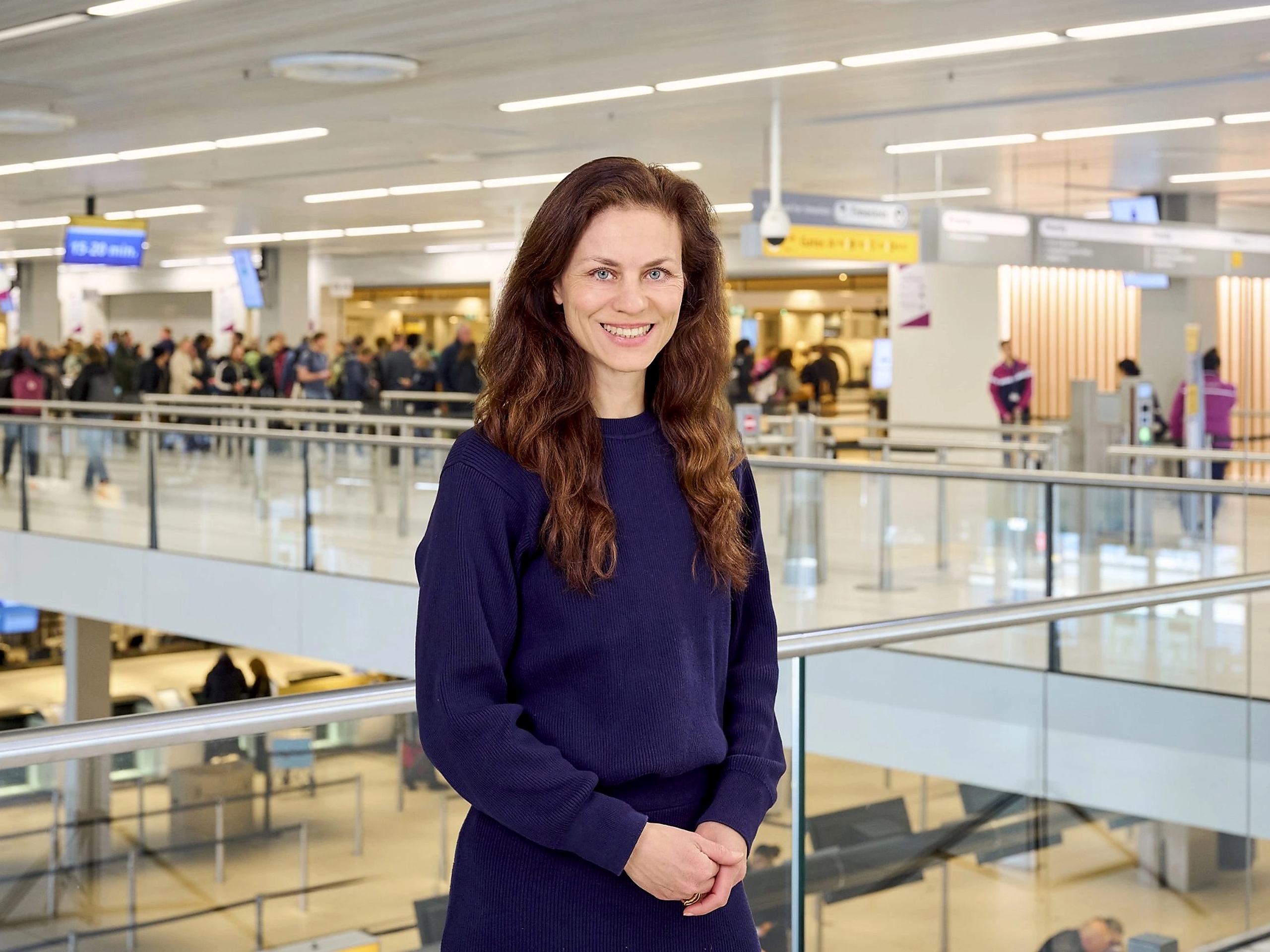
In this episode of Heroes of the Undercurrent, we speak to Inge van Baardwijk, Sustainability Lead Commercial at Royal Schiphol Group (Amsterdam Airport). Together with Bram Krete (Business Manager F&B), she took the initiative in 2023 to make the entire F&B offering at Schiphol sustainable. What followed was not a policy from above, but a collective movement from within. In collaboration with Conceptional and its partners (We Design Food and Wouter Staal) and together with various business partners such as Avolta, Vermaat and De Koffiesalon, a new F&B sustainability strategy was shaped, culminating in the signing of a covenant in June 2024.
Without legal obligation, but with clear quantifiable targets, right sponsors and intrinsic motivation.
Inge speaks clearly and passionately about the origins of this project: 'The moral sense that we should take care of our environment and the earth has always been present in me. But what matters is what you do with it.' From that realisation, she and Bram took the initiative to put the topic high on the agenda. 'We not only pitched it, we also budgeted, facilitated and curated it.'
The project did not become a top-down story, but a carefully constructed movement. 'We saw that many colleagues – in all layers of the organisation – were open to the moral appeal. We are a large organisation, we can make an impact, be an example, and we have a responsibility as a client to ask the right questions within the value chain and try to move the system behind the F&B offering. That conviction gave us the energy and legitimacy to follow through.'
According to her, therein lies an important lesson for other organisations: 'Despite complexity, interests or scale: if the moral compass is present at the core, you can initiate movement.'
What is special about the Schiphol process is that nothing was legally enforced.
There was no contractual obligation. What there was, however, was trust. And that is more powerful than any clause.
— Inge van Baardwijk
All parties involved committed themselves to a shared goal towards 2030: making supply, procurement, communication and operations more sustainable.
The covenant thus became more than a symbolic document. 'It shows that we want to start the movement together. Each with its own dynamics, but with the same goal in mind. We no longer need to reinvent the wheel each separately, but join forces to take steps together. The fact that competitors were also willing to work together says everything about the strength of the shared story and ambition.'
Remarkably, the business partners did not come in with scepticism about the substantive objectives. On the contrary – from the start, they showed a strong willingness to contribute to Schiphol's sustainability ambitions. The reluctance lay elsewhere: 'It was exciting to sit at the table together as competitors,' Inge explains. 'You have to dare to show a certain degree of openness, and that requires trust.' That tension was soon broken when the first constructive steps were taken together. 'As soon as the first movement was there – someone sharing a practical example or naming an obstacle – space was created. That helped enormously to build that trust. From there, things actually went naturally.' And what turned out: there was already a lot of activism among our partners – not least even personal activism. People really want to change, but are looking for feasible ways to do so.
She continues: 'And yes, then it sometimes becomes uncomfortable. Because sustainability also means recalibrating business models, making concessions, taking risks. But the willingness was there. And that gives hope.'
The energy in the first few months was almost tangible. 'That first phase felt like a start-up: creativity, enthusiasm, connection. People were thinking outside the box. We were not just making it sustainable – we had started a movement.'
Euphoria is wonderful, but it is not a strategy. The big pitfall is the phase that comes next: scaling up. That's where many transitions are halted.
— Inge van Baardwijk
According to Inge, the success of a transition depends on how prepared you are to scale-up. 'After the euphoria, sustainability policies need to be embedded in the organisation: in processes, systems, roles, capabilities, dashboards on the one hand, and in leadership, culture, forms of collaboration. If that is missing, it ebbs away.'
She therefore advocates a conscious approach to scale-up: 'Not everything needs to be buttoned up, but you do need to know: what is the rhythm? Who is responsible? How do we measure progress? How do we keep each other on our toes?'
The ultimate goal is the so-called grown-up phase. 'In it, sustainability no longer sits on the sidelines, but simply at the table – as an equal player between finance, marketing, operations. Sustainability is then a full board member.'
But for that, sustainability has to adapt as well. 'We cannot afford to remain merely idealistic. Sustainability must also learn to speak the language of business. About profitability, risk management, customer value. Only then will it really be heard.'
A key success factor in the Schiphol project was reducing big goals to practical choices. 'We often talk about climate and CO₂, but that is too abstract for many people. So we went back to basics: ingredients, recipes, waste streams, product presentations.'
From that, small but powerful changes emerged. For example, in the way plant-based products are positioned. 'We didn't say "this is plant-based". We just made it more attractive, tastier, more logical. That's nudging.'
Inge consciously works according to the laws of the transition model. 'You have to start with the frontrunners – the first 25% who want to change. You give them space, responsibility and visibility.'
The other 75% of guests then follow with clever nudges: 'Positioning, taste, price, portion size. You steer without forcing. You make the sustainable choice the easiest choice.'
The aim is not to force people. 'We don't want a dictatorship of the lentil burger,' laughs Inge. 'We want an environment where everyone can make their own choices – but where the context is set up in such a way that those choices become more sustainable.'
That could also mean offering organic meat, products with more animal welfare, or sourcing local suppliers. 'Not everyone needs to eat plant-based food. But if the impact of consumption improves, then you do make a difference.'
One of the most inspiring parts of this project was the collaboration between competitors. 'We saw that sustainability connects – even parties with opposing interests. And precisely because the covenant was drafted jointly, support arose.'
Such cooperation offers opportunities for the whole industry. 'If you make sector-wide agreements, you avoid the competitive disadvantage that sustainable choices sometimes entail. You accelerate together.'
A recurring theme in the interview is the role of leadership. According to Inge, this is the lever for any change. 'If leaders take the issue seriously, the organisation will naturally follow. But it starts with visibility.'
This does not involve grand speeches, but credible behaviour. 'Do you eat plant-based when you offer it yourself? Do you ask questions at meetings? Do you incorporate it into your decisions? Then you set the tone.'
What typifies Inge is her ability to combine the humanity and the systemic side of sustainability. 'Change is about people. But if you don't embed it systemically, it remains non-committal. And if it's only system, you lose the soul.'
The trick is to do both at the same time: 'You have to touch and structure. Inspire and organise. Only then do you create something that stays.'
What started as a vision is now a collective ambition, translated into actions, dashboards and agreements. In doing so, Schiphol is setting a standard that can inspire others.
But Inge remains level-headed:
We are far from there. This is only the beginning. But when I see where we are now – with this energy, this collaboration, this shared will – I am sure: this will not stop.
— Inge van Baardwijk
This interview is part of the Heroes of the Undercurrent series by Conceptional. Previous episodes: Debbie Rooms (Compass Group Netherlands). Inge van Baardwijk is Sustainability Lead Commercial at Royal Schiphol Group (Amsterdam Airport).