People need to be touched to actually change. You can't just convince them with numbers and risk analysis.
— Debbie Rooms
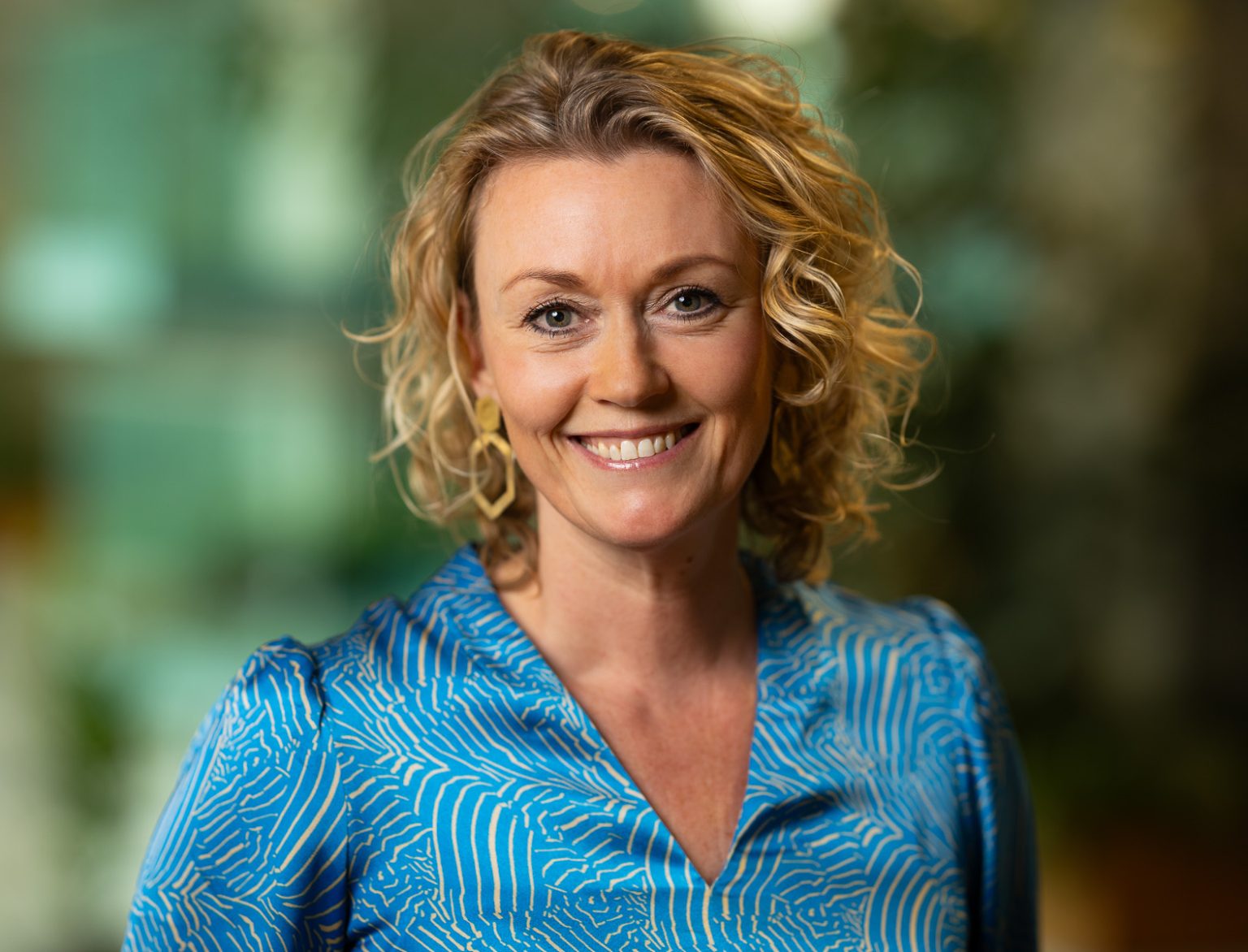
In the series Heroes of the Undercurrent, we speak to people who are working daily to drive the sustainability transition within the F&B sector. In this article, Fred van Aken (Managing Partner, Conceptional) talks to Debbie Rooms, head of sustainability at Compass Group Nederland B.V. Before taking on this role, she worked in various sustainability and CSR roles within Rabobank. Her drive and clear vision on sustainability make her an inspiring interlocutor. In this interview, Debbie takes us through her journey, her challenges and her vision for the future.
Debbie's personal drive for sustainability has deep roots. From a young age, she felt the need to contribute to a better world. 'I was a child who went around the house like the police turning off taps and lights everywhere,' she says. 'I was confronted at an early age with the realisation that the earth is fragile and that we as humans have an impact on it.'
A defining moment in her youth was her involvement with the World Wildlife Fund's Rangers Club. 'I wanted to help orangutans and decided to spend my pocket money on a membership. When I received a hug as a welcome gift, I was angry. That money should have gone to the animals, I thought.' That fierce reaction marks her drive, which has remained a driving force throughout her career.
While working at Rabobank, Debbie started as an account manager, but soon her role grew towards sustainability. 'I noticed that sustainability was not an extra task for me, but was completely intertwined with how I live my life as a person,' she says. This realisation gave her the conviction that she could help companies make a real impact. 'In conversations with clients, I saw that many entrepreneurs were already developing great initiatives, but were struggling with the practical translation. That triggered me to make sustainability concrete and manageable.'
In 2023, Debbie and her family visited a glacier in the Alps. 'I wanted to show my young children how far the ice had retreated, making them aware of the tangible effects of climate change. Seeing that melting glacier and hearing the flowing melt water was confronting. Though the urgency and awareness are already deeply rooted in me, such an image hit me every time. It literally gave me a stomach ache. But above all, I hope this was a key moment for my children – an experience that motivates them to make conscious choices for themselves later.'
Debbie saw a shift in the way sustainability is approached within companies over the years. 'Sustainability used to be seen mainly as a duty of care; something you do out of responsibility for society and the planet.' However, that approach has gradually shifted to a focus on risk. 'Companies are now increasingly thinking: what will happen if we do nothing? What will it mean for our operations, our financial position and our reputation?'
According to Debbie, this shift brings opportunities, but also risks. 'Risk thinking makes companies feel more urgency to become more sustainable. But if you approach sustainability only from a defensive stance, you lose the human aspect.' She believes the real motivation to act sustainably must come from the heart. 'People need to be touched to actually change. You can't just convince them with numbers and risk analysis.'
She stresses that personal experiences often play a crucial role in this awareness-raising. 'When people feel that climate change or environmental problems affect them personally – whether through extreme weather, food shortages or health problems – only then does real commitment arise.' Debbie is therefore actively committed to fostering that personal awareness, for example by organising excursions, tastings and inspiration sessions to make sustainability concrete and tangible.
'You have to bring people along with the sense of urgency,' says Debbie. 'That's the only way to ensure that behavioural change is permanent.'
Debbie stresses that the first step is to mobilise the 'forward energy' in an organisation. 'You have to start with the people who are intrinsically motivated and want to move forward,' she says.
By activating this group and giving them space to realise ideas and initiatives, you create visible successes. 'Forward energy works like a magnet,' Debbie explains. 'People who are initially passive see what is possible and then feel emboldened to take a step too.'
Debbie believes that propagating positive examples is the key to reversing resistance. 'You have to show that sustainable choices are not only necessary, but also offer opportunities and deliver results. When people see that, resistance decreases.'
But forward energy alone is not enough. Debbie stresses that laying down clear structures and guidelines is crucial to achieve lasting change. 'You can't just keep running on energy. You need a clear rails, clear tools that gives employees a foothold.' These tools include concrete guidelines on how employees can make sustainable choices in their daily work. In an organisation the size of Compass Group, it is not always easy to get all employees on board. 'We work with more than 500 locations and many temporary workers. That makes consistency difficult,' says Debbie.
This is why Debbie strongly believes in the power of training and guidance. 'It is not enough to set guidelines and hope that everything goes well. We train employees on how to have a good conversation with guests. The enthusiasm and knowledge of our employees is ultimately the key to success. You can't instruct people once and expect them to keep doing well afterwards. Training has to be repeated so that employees feel increasingly confident in how to integrate sustainability into their work.'
According to Debbie, this combination of forward energy, a clear track and ongoing guidance ensures sustainable behavioural change that sticks. 'Forward energy is the start, but without clear frameworks and ongoing support, that energy falls silent,' she concludes.
According to Debbie Rooms, one of the biggest challenges around sustainability is avoiding catch-all terms and translating abstract goals into concrete, understandable steps. 'If you only talk about "sustainability", it remains a vague concept for many people,' she explains. 'People then often don't know exactly what to do.' This is why we focus on two clear and tangible pillars: the transition to plant-based and reducing food waste.
In practice, this means that Compass Group focuses on concrete actions that employees and guests can understand and implement. 'For example, we organise tastings where people can experience how delicious plant-based food can be,' Debbie explains. 'By letting people taste first without directly naming that something is plant-based, we lower the threshold.' Debbie also avoids abstract terms in internal communication. 'I don't use the word "sustainability" in conversations with colleagues from operations. Instead, I talk about plant-based eating and food waste – topics that are recognisable and where people understand what their role can be.'
Besides clarity, Debbie stresses the importance of achievable sustainability goals. 'If goals seem unrealistic or too far away, people get discouraged. They think, "It won't work anyway, so why should I start?"' That is why Compass Group has deliberately adjusted the sustainability goals to smaller, concrete steps. 'We look at our long-term goals for 2030, but also translate them into what we need to achieve as early as 2025,' says Debbie.
To support employees, it is important to offer handles and practical tools. 'Not everyone has the knowledge or skills to just get started with sustainability,' Debbie explains. 'That's why we help colleagues by providing insight into the steps they can take and how they can apply them in their daily work.'
'Sustainability is not a one-size-fits-all process; it requires customisation and flexibility,' she says. 'In an organisation like Compass Group, you work with diverse clients and their employees: from companies at the forefront of sustainable innovations to teams still searching for feasible steps. That means you have to constantly switch between different speeds. Sometimes you can take big steps immediately, while at other times you have to be patient and make small adjustments step by step. It's that balance that determines whether you get everyone on board.' According to Debbie, it is essential to recognise progress, even if it comes in small steps. 'Ultimately, it's about creating movement – and that starts by giving everyone space to get on board at their own pace.'
Within organisations and, in fact, throughout society, leadership plays a crucial role in the success of the sustainable transition. 'Leaders need to embrace the topic,' says Debbie. 'If they reflect sustainability in their presentations and decisions, it will naturally become an integral part of business operations.'
Debbie emphasises that leadership is not just about making big strategic choices, but rather about motivating and supporting employees in their daily choices. 'A good leader knows how to touch people and inspire them to make the right choices.'
An important aspect of leadership within Compass, according to Debbie, is leading by example. 'If you want employees to promote plant-based eating, managers have to eat it themselves. Practical examples like that have huge impact,' she says.
By 2028, Debbie hopes plant-based food will no longer be a niche, but the norm. 'We aim for 70% plant-based offerings,' she says. 'That seems ambitious, but acceptance is growing and the market is moving in that direction.'
In addition, Debbie sees an important role for regenerative agriculture. 'We should not only switch to plant-based, but also ensure that the products we offer are produced in a sustainable and regenerative way.'
To realise that vision of the future, Debbie believes collaboration is essential. 'We need clients to inform and motivate their employees. Compass can put out a great offer, but without the support of employers, it is difficult to drive the desired behaviour.'
Debbie strongly believes in the power of the undercurrent: a movement of people who want change and actively act on it. 'Even if political climate plans fall away, this movement is unstoppable,' she says. 'We're just going to do it.'
Her advice for others who want to commit to sustainability is clear: 'Start small. Choose conscious moments to buy organic meat, for example, or try a plant-based option. You don't have to become a vegetarian, but choosing consciously already makes a big difference.'
With her optimism, perseverance and pragmatic approach, Debbie shows how to make an impact even in a large, complex organisation like Compass Group. Her story is an inspiring example of how positive change from the undercurrent can grow into a powerful movement.
This interview is part of the Heroes of the Undercurrent series by Conceptional. Debbie Rooms is head of sustainability at Compass Group Nederland B.V.