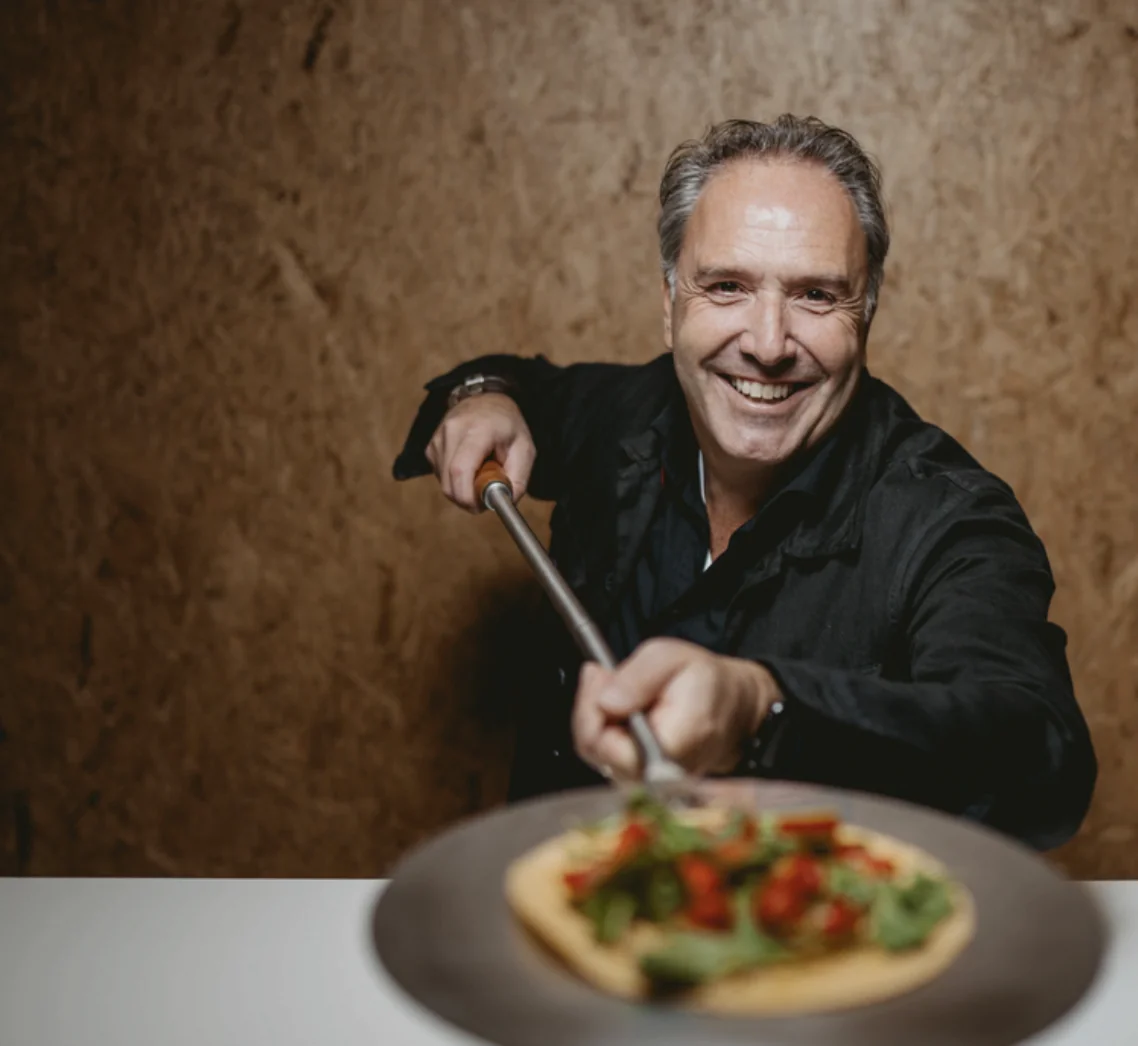
Food and beverage has quietly become one of the most decisive factors in how shopping centers perform. What used to be an afterthought, a café as a service for shoppers tucked away, is now often the reason people choose one destination over another. To explore how this shift happened, and where it's heading, we sat down with Herman Kok, who recently joined Conceptional as Head of F&B Research.
With over 25 years in retail real estate research, spanning Central Europe's shopping center boom of the 1990s, an international research role at ICSC International Council Shopping Centers, several research roles including Head of Research at Dutch developer Multi Development, Head of Research at UK-based private equity investment firm MARK Capital Management, and his own advisory work with DISCvision and the Dutch Council of Shopping Centres, Herman has watched F&B move from a functional necessity to a strategic driver of value. In this conversation, he shares what he's learned about landlords' biggest blind spots, what actually makes F&B work, and how data is changing the game.

My background is in economic and social geography. I did a master's and PhD in that field, and it was during my PhD that I first got into real estate, initially on the residential side. My first real job took me to Budapest in the late 1990s, right as the shopping center development boom in Central Europe was taking off. There was very little data available at the time, so a lot of my early work was building the market research and feasibility analysis that didn't yet exist.
From there, I spent close to a year at ICSC Europe in London as a senior research analyst, where my main task was setting up a European research network of member companies, essentially building a knowledge platform for the industry. I stayed close to that research network ever since. After ICSC, I joined Multi Development, a Dutch shopping center developer active across Southern Europe, Western Europe, Central Europe, and Turkey, where I grew from market researcher into Head of Research. I later moved to London to join a British private equity firm Meyer Bergmen, today known as MARK, focused on retail and mixed-use investment, before returning to the Netherlands in 2022 to run my own advisory practice and lead the KERN Dutch Council of Shopping Centres for two years.
F&B specifically clicked for me about ten or twelve years ago, when I was working on a series of transformation and refurbishment projects that needed real F&B expertise. That's how I first came into contact with Reoewein, now at Conceptional; we ended up working together on several schemes, including Saint Enoch in Glasgow and Marmara Forum in Istanbul, and later on a food hall repositioning at the Steen & Strøm department store in Oslo. Also, Reoewein coordinated an insightful F&B study visit for the Multi-team to London, Birmingham, and Leeds. That's really where my own eyes opened to how food courts and F&B concepts actually work: operators, formats, guest experience. So while I'm new to Conceptional myself, my connection to the firm, through Reoewein, goes back quite a few years.
It started out extremely functional, almost like the way people think about restrooms in a shopping center. Landlords accepted that visitors needed a coffee break or a place to sit down, but F&B wasn't seen as a reason to visit. Some developers had the opinion that gastronomy and leisure would only distract fro the main activity of visitors: shopping. However, F&B and gastronomy was much more prominent in retail environments in Southern Europe and Turkey from the beginning compared to Western Europe. But soon enough, developers and investors discovered that F&B made people come, and just as importantly, they stayed longer.
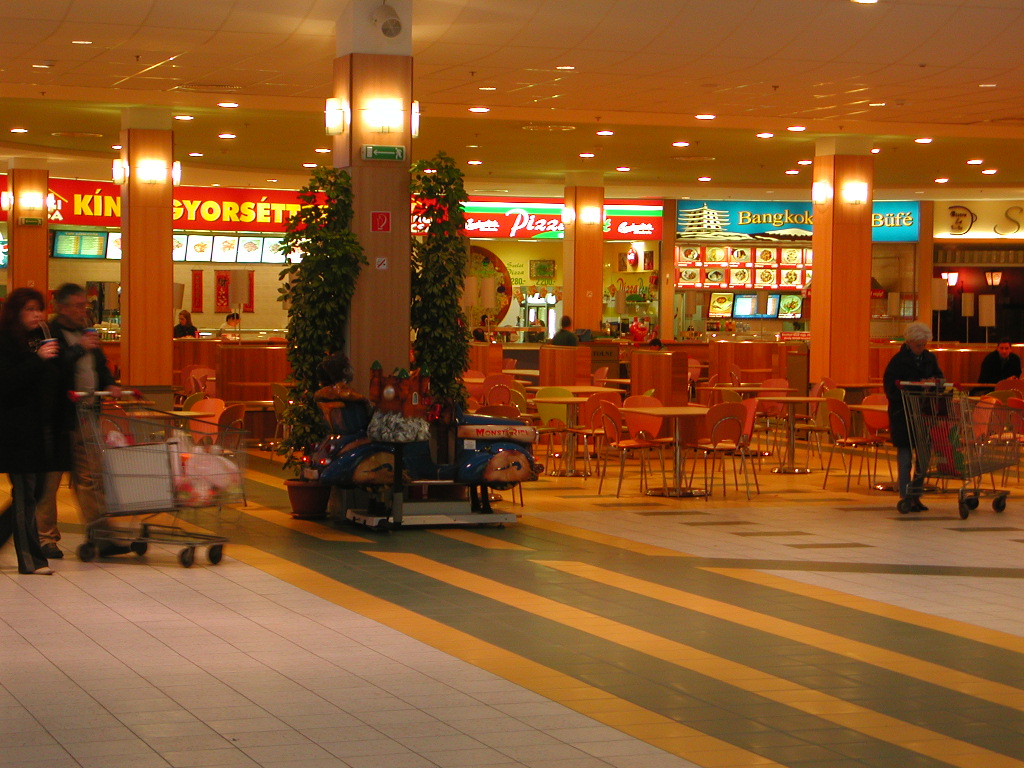
That dwell-time effect had always existed, but it was only really valued once retail came under pressure and the industry started talking about the "experience economy": how do you keep people inside longer, and make sure they have a good time? From around 2005 onwards, F&B's role grew dramatically. Experience became more important as rising online sales made the store checkout less dominant. Extended opening hours also helped: as shops started closing later and also opened on Sunday, F&B could move into casual and early dining rather than just serving daytime shoppers on weekdays.
As mentioned earlier, there's also a strong regional pattern in Europe. In Southern Europe (Spain, Portugal, Turkey), restaurants have long been an anchor in their own right; going to the mall for dinner, or to impress a date, is completely normal. In France and much of Western Europe, shopping centers grew up around the hypermarket model, and F&B stayed more of a service than a destination for far longer. Climate plays a role too: in hot climate areas people go to the mall for the air conditioning as much as the shopping, and the reverse is true in very cold or dark climates.
Today, retail, leisure and F&B function together, in a mix that's very location- and market-specific. I'd argue F&B is the bridge between the two others: you don't necessarily want to buy a dress right before the cinema, or browse fashion with your grocery bags in hand, but a coffee or a meal fits naturally around almost any other activity. The same location can serve visitors for different purposes.
Where F&B is missing or underperforming nearby, dwell time shrinks and the destination becomes less compelling, full stop. You see this clearly with outlet centers: purely financially, they don't need F&B at all, since it pays lower rent than fashion. But even outlet operators have realized that F&B keeps people on site longer and helps position a visit as a full day out, not just a shopping trip.
There's also an important distinction between standalone regional malls and shopping galleries integrated into a town or city center. In an integrated location, people think of the whole town as "the destination": if the mall's F&B underperforms, they'll simply eat elsewhere in the same town center. But in a standalone location, weak F&B removes one of the main reasons to visit at all, because people are looking for the complete package: buying, exploring, meeting friends, and eating, all in one place.
Landlords are, by definition, not retailers, and F&B is even further from their comfort zone than retail. Retail is largely made up of professionalized, international chains; F&B, outside of fast food, has historically been a fragmented business dominated by local, independent operators. Landlords often struggle with a very basic question: when you talk about a restaurant, are you talking about the space, the brand, or the chef? For a long time, the answer didn't matter much: you could "plug in" a few cafés and restaurants and it would work, simply because demand for F&B had been under-served for years. That's no longer good enough.

F&B is also a much faster-moving business than retail. Trends around health, cuisine, and pricing shift quickly, so keeping a food hall or F&B offer up to date takes real, continuous attention, otherwise it goes dull fast. On top of that, F&B needs infrastructure retail simply doesn't: water supply, sewerage, ventilation for an Asian kitchen, for example, versus a shop that just needs four walls. And because F&B revenue per square meter is inherently limited (there's only so much a restaurant can turn over in a day), rents have to stay proportionate to turnover. Landlords who don't grasp this end up pricing F&B units too high, pushing tenants out of business, and creating vacancy all over again.
One clear shift is F&B moving from inward spots in the back or the upper floor to outward and becoming visible: terraces, rooftops, ground-floor restaurants, units that open onto squares or streets. That's actually the opposite instinct from retail, where many tenants want to avoid direct sunlight to protect their products. Restaurants want to be seen, because visibility itself attracts people. This logic applies to rooftops especially: many shopping center owners are discovering that their roof is an underused asset, and turning it into a green terrace or pavilion with indoor-outdoor F&B can create real destination value.
More broadly, people increasingly want to feel like they're in a real place with its own identity, not a closed box, but something closer to a piece of city, connected to the streets and squares around it. A good F&B offer should also cover different moments and motivations throughout the day: a quick coffee or snack, casual dining, and full-service restaurants, rather than just one format repeated many times.
Westfield Stratford in London is a classic example of getting the zoning right. Near the supermarket, you find grab-and-go and hybrid food-retail units: bakeries doubling as sandwich counters, for instance. Elsewhere, there's a food court for quick, budget-friendly snacking, a casual dining zone with more attention to design and cuisine, and a top-floor level with restaurans linked to the entertainment offer. That last placement is deliberate: restaurants are lively at mealtimes but can look dead the rest of the day, and "dark" units are unattractive for shopper flow. Clustering restaurants together, the way a town square naturally does, avoids that problem, a principle just as valid in a shopping center as it is in a city.

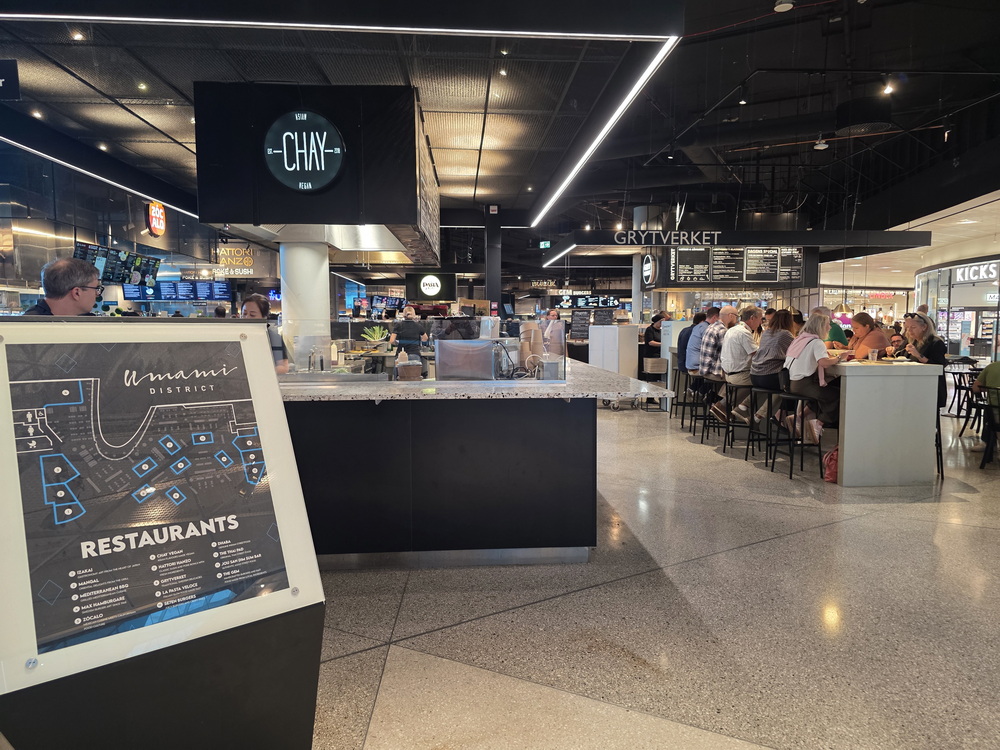
Historically, a lot of F&B decisions in shopping centers were made on gut feeling, and to be fair, that instinct still matters, especially for developers and entrepreneurs who can spot the potential in a location before the data catches up. But as competition increases and customer expectations around experience, health, and social values keep shifting, gut feeling alone isn't enough anymore. There's a limit to how many times a day someone can eat, so, in a context of increasing F&B supply, getting the offer right matters more than ever.
I'd split the data into two categories. On the supply side, it's classic market research: does a new F&B plan fit the market, is there room for it, or are we walking into a saturated, competitive space? And how can we make the difference? On the demand side, it's about understanding visitors beyond income or family composition: their actual lifestyle. Do we see more individually oriented or more community oriented people? Are people more sensitive to the newest trends and status, or do people rely more on what they are familiar with? We typically look at models built around two axes: extrovert versus introvert, and individualist versus collectivist, which together map out somewhere between eight and twelve lifestyle groups.
The scale of what's now possible is striking. In some new developments (the Fiera area in Milan, for instance), F&B has grown to represent up to 50% of total leasable space, a level that would have been unthinkable not long ago. It's a trend also visible in airports, where extended waiting times, restrictions on carrying purchases, and reduced duty-free savings have made F&B, rather than shopping, the default way to spend time before a flight. An increasing number of airports, like Istanbul Airport, appear as malls with gates, where the F&B and the retail is an attraction in itself.

Most of our clients aren't actually looking for research for its own sake: they're looking for advice, conclusions, and strategy. Research is the tool that gets us there, not the end product. At Conceptional, that means starting with a genuine understanding of how a location works: who visits, where they come from, and what they're actually looking for, and using that to ground the advice we give, rather than relying on assumption.
Normally, there's a real gap between a landlord or operator and a specialized research provider: different languages, different priorities. Key is to pose the right question, as that defines the quality of the answer. What we try to do is bridge that gap: combine a strong read of supply and market dynamics with a genuine understanding of the customer, whether that's shopping center visitors, local residents, or, in other asset types, an entirely different visitor profile. That approach isn't specific to shopping centers: it applies just as well across the different types of locations we work on.
This kind of research is becoming more important as the market institutionalizes: more professional owners, more saturated and competitive markets, and less room for error. Tools have also improved, and data is genuinely easier to work with today than it was ten or fifteen years ago. But in the end, research can never fully de-risk a concept: the quality of the food and the strength of the operator still matter most. What good data can do is make sure a strategy is built on solid ground before those final, harder-to-quantify factors take over.
From service provision and filling vacant units to becoming the bridge between retail and leisure, F&B's journey in shopping centers mirrors a broader shift in how people choose where to spend their time. As Herman's career shows, understanding that shift takes both experience on the ground and increasingly rigorous data. It's a conversation Conceptional plans to continue: a deeper dive into F&B research itself is already in the works.