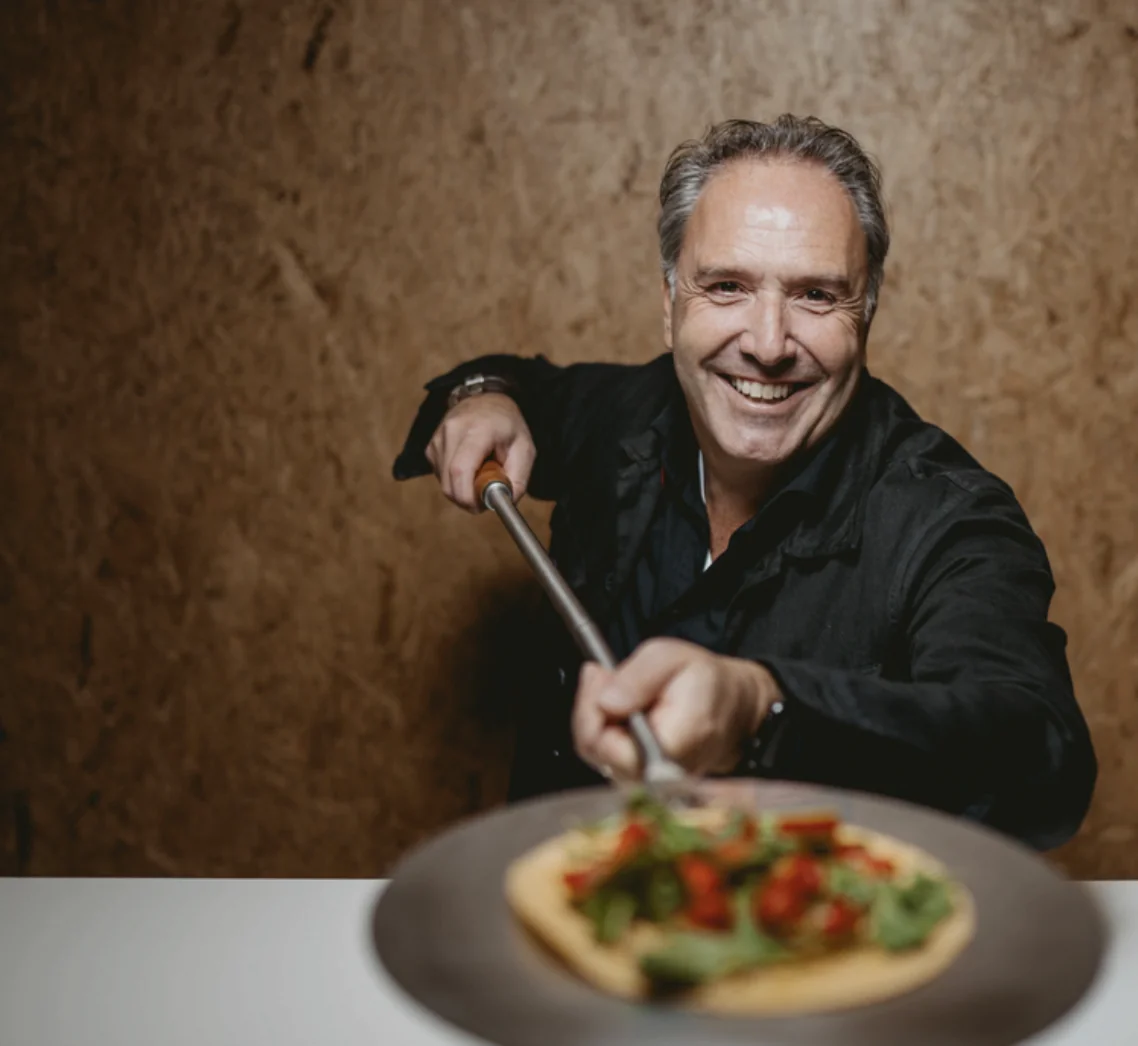
Discover our insightful interview with Edwin Spruijt on the secrets to culinary brand success. Learn how to define your concept, build loyalty, and stand out from the crowd! Read the full article below.
For us, an F&B brand concept, a successful one, is built upon two essential elements: the head and the heart. The head represents thorough research, logical processes, practical thinking, and commercial viability. These elements provide us with a deeper understanding. On the other hand, the heart encompasses creativity, flavour, emotions, empathy, the intangible, and the human touch. These aspects bring the element of surprise. When combined, they create an irresistible blend that allows us to delight both the guests by crafting concepts that truly touch the heart. The visual outcome of this is the design that we see stepping into the restaurant or looking at the logo or packaging.
But the creation of the concept as some would perceive it, does not start with the visuals, but way before.
Building a brand is essentially ensuring that we get from brand promise to brand delivery, constantly striving to create value for your brand. This involves providing the appropriate concept, effective communication, product development, pricing strategies, streamlined processes, and all other necessary elements to equip your on-the-ground teams with a competitive advantage.
This is what our Brand Heart model encompasses. The F&B vision & branding is essentially about 'who the concept is at heart'. You need to define what your brand promises, what the concept stands for, and what the concept wants to convey, with elements such as the brand promise, brand identity, brand positioning, and brand appearance.
Drawing up a clear brand makes future choices easier within the organisation.
Everything can and should be implemented in full alignment with the brand promise. This makes business operations more efficient and results in a concept where the identity of a brand can be felt by the consumer in every fibre and every aspect and where the consumer immediately feels that everything is right. An appealing brand directly communicates to the sub-conscience. This is what encourages customers to return, and boosts their overall satisfaction, dwell time and also their average spending.
An appealing brand directly sparks loyalty. It, however, needs to be relevant for the target groups. Hence, our concept development process always starts with studying who the concept will cater for. Understanding their behaviour needs and wants is the first step to creating a brand that just 'feels right'. If we start from here, the identity of the brand will be easy to identify with for the customer, hence will return again and again. The more trust you build with your steady level of service, quality, and dining experience, the more likely, your brand will be there at the back of your customer's mind, to keep on returning to. Every day, your teams are entrusted with the task of delivering on these promises. When doing so, they must focus on exceeding guest expectations while managing their top-and-bottom-line performance. It's a complex juggling act that requires significant skills and expertise.
If we are talking about new demands, there is the initial question of whether it is a trend-driven or a growth-opportunity-driven demand.
In the former case, thus when we are talking about trend-driven new demands, we need to look at a few elements. The positioning of the brand starts by defining the heart of the concept, what it stands for, and what it advocates. Similarly to a person, this is not something that changes from year to year; just as we don't change the values we stand for, neither should an F&B concept. This is what shapes the personality of the brand and creates the core promises it makes to its customers.
When we are talking about new demands, what we mean are the trends, which shape the needs and wants of our target group. Global mega-trends emerge and last for many, many years, even decades, consumer trends are here for a shorter period, and product trends can come and go year by year. Adapting to new demands means a constant curiosity about what our target group is seeking out, what the newest trends are and constantly innovating on how we can implement small elements into our operations.
To give an example, menu and presentation trends are often influenced by new and upcoming flavours, and ingredients, which are essential to adapt to. What we should not divert from is the core promises our concept made. In the latter case, when we see brands going after new demands in the hopes of significant growth opportunities, they tend to completely shift their positioning, to do so. We see for instance many concepts, created during the COVID-19 pandemic, to go from virtual brands to brick-and-mortar restaurants.
To keep up with constantly changing demands, restaurateurs must embrace technological innovations that enable greater customer satisfaction. Reaching customers now happens through multiple channels — and doing so is no longer optional, but essential.
What we often see in brands is that they convey a superficial atmosphere, in other words, there is a lack of soul to them. This is because these concepts are not created with the values and brand promise in mind. It is a regular practice to start crafting the brand appearance, such as the menu offer, logo, signage or interior design, without laying down the foundations of the concept.
A lot of restaurants in hotels for instance are created with functionality in mind as they had to cater for breakfast, lunch and dinner, but from a concept perspective, they lack a deeper meaning, the heart, hence there can be no storytelling.
Depending on the location, think as an entrepreneur stand-alone restaurant too, reflect the needs of your restaurant guests, not only the hotel guests, create your own identity but always keep in mind that for instance, breakfast is an important part of the hotel restaurant, so multifunctional thinking is also key. The use of day parts is also important to consider but again it depends on location and competition as well. Another common mistake we see is that they overestimate the importance of the appearance and underestimate the significance of functionality.
We always start by laying down the functional design of the F&B locations. This is essential as we need to make sure that both the back-of-house and the front-of-house are set to be efficient and operationally well-functioning, practical and convenient.
First, we need to know the routing, and where the juicer will be put to ensure that no tables are lying around for the waiter to bump into and that we place electricity outlets to where we need them to be. Then comes the interior design element to it, not the other way around. This is often forgotten.