Companies are looking for ways to better understand both their intrinsic position and the needs of their target audiences, with the goal of making their practices more sustainable, having a positive impact on the environment, while at the same time safeguarding commercial interests.
Today, we are speaking with Hidde Verschuren, F&B Sustainability Specialist at Conceptional, who supports our clients on a daily basis through the Sustainable Food Route methodology. Over the past years, Hidde has played a key role in guiding various food service organisations through their transition towards integrating sustainability into their businesses. In this interview, he shares his insights on the evolution of the Sustainable Food Route, his vision for the future, and advice for companies looking to embark on their sustainability journey.
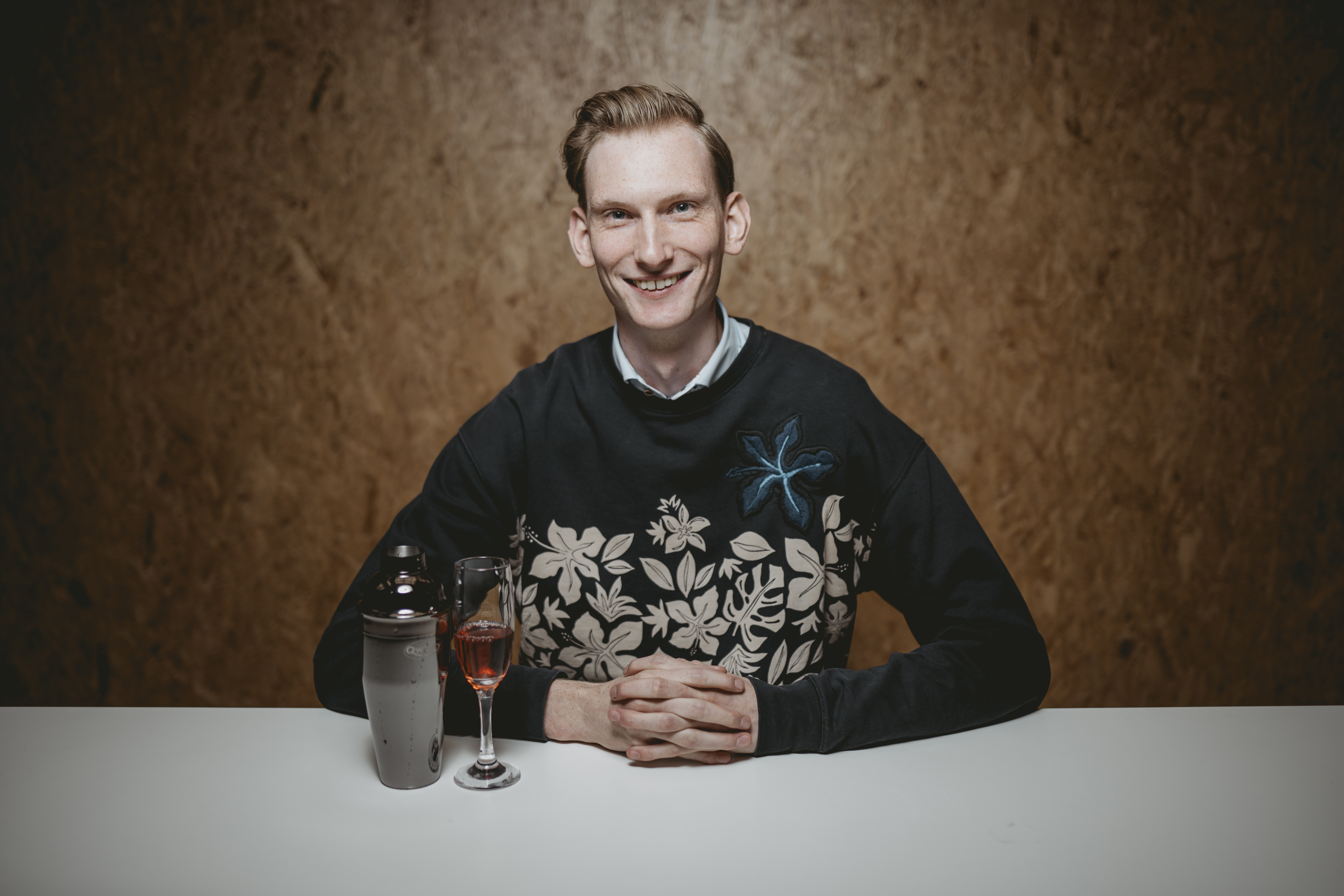
When I joined Conceptional in September 2021, the initial idea for the Sustainable Food Route was already being developed. We observed that many companies were running event driven sustainability initiatives, but a holistic approach was lacking. The question was: which concrete steps should a food service provider take?
We quickly realised that successfully implementing sustainability requires a thorough understanding of the market context, company vision, brand DNA, capabilities, capacity, product offerings, pricing, and the tone of voice that resonates with the target audience. While many companies may share the same ambition to make a positive impact, the actual route towards sustainability differs for each organisation and brand. A simplistic, one size fits all approach simply doesn't work and certainly won't last. This realisation ultimately led to the creation of the Sustainable Food Route.
To ensure a pragmatic and actionable process, we started collaborating with our culinary partner WeDesignFood, as plant based menu development and product engineering are among the most impactful drivers of change.
When working on Sustainable Food Route projects at Schiphol and the Efteling in 2023, I quickly realised how essential it is to share knowledge and create awareness. Personally, it had been a long standing ambition of mine to contribute to a project for the Efteling. Being able to apply all the knowledge we had built up over the years to an amusement park that I have loved since childhood made it feel very special.
What I've learned is that adopting a sustainable approach requires commitment from everyone within an organisation. It's not enough for only a few passionate employees to know which buttons to push; the transformation needs to run much deeper. It is truly a transition process that touches the entire organisation. Every new project teaches me something new and gives me energy, especially when I see how organisations, once properly structured and focused, are able to make real step changes.
The most important thing: ensure that sustainability is not just the responsibility of the sustainability manager, involve everyone.
My personal vision on sustainability has definitely changed due to the various sustainability projects I have been involved in. In my opinion, the transition we must make together boils down to: fewer animal products and better animal products. I try to limit the number of animal products I eat and when I do eat animal products, I prefer chicken to beef because of the much smaller impact chicken has on the environment. And if I do buy animal products, I try to look out for certification on animal welfare where possible. That is also exactly what I sometimes find difficult about food service. While you can always see the ingredients and certification at a supermarket, with restaurants it is often a matter of trusting that the restaurant is making the right choice.
My respect for companies that set a good example and are principle-driven has grown enormously in recent years. The consumer has a major role, but in my opinion the real movement will have to come from the food service operators and the government. We all know that changing consumer behaviour takes time and meets resistance. Without leadership and guidance we are not able to achieve our objective. Being able to contribute a small part to that gives me a lot of energy.
Consumers play an important role, but in my view, the real movement must be driven by food service operators and government.
First of all, I would like to emphasise that creating a sustainability policy is a means to an end and not an end in itself. The real work only starts then. Don't be distracted by the complexity of the subject, but choose a few themes on which you as an organisation will focus. Most importantly, make sure that the sustainability policy is not just the responsibility of the sustainability manager, but involve everyone. Motivate them and make it a common goal. Better move slower but collectively than moving fast by only a few. Make all departments responsible for their own actions, pilot projects and objectives. Leadership, clear communication and above all a great deal of enthusiasm are the keys to success.
Don't be overwhelmed by the complexity; select a few key themes and focus on them as an organisation.
Currently, much of our work focuses on defining a sustainability vision together with our clients. We define ambitions, set KPI targets, and develop clear and actionable roadmaps. In the coming years, I expect our focus will increasingly shift toward supporting clients in actually achieving these set targets and ensuring that the entire organisation aligns accordingly.
Ideally, I even hope that eventually 'Sustainability in F&B' as a separate topic will evolve into that sustainability will automatically be integrated into every decision, from concept development and master planning to strategic choices.