More than ever, making an impact within the food service sector concerning sustainability is necessary, relevant, and increasingly common. In this four-part series, we talk to Schiphol, Plaswijckpark and Wouter Staal. They are all working in their way to make an impact on food service. This week part 2: Ans Westplate of Plaswijckpark.
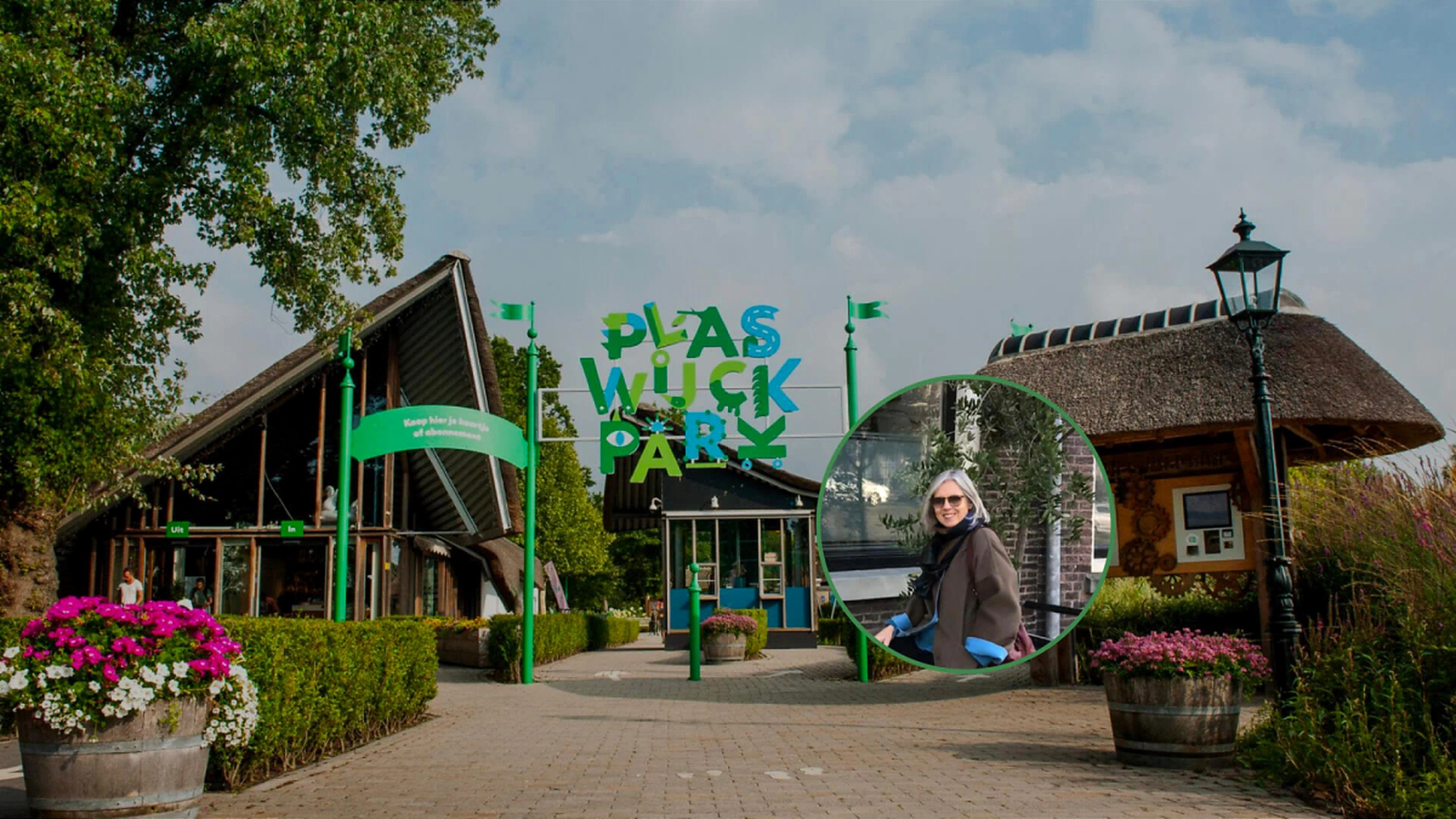
Ans Westplate has been a general board member for nearly five years at Plaswijckpark, a play park for children and their families in Rotterdam. The park has around 450,000 visitors a year and offers a place where children can romp all year round. Conceptional has been active at Plaswijckpark in 2022 with the Sustainable Food Route. Conceptional, together with We Design Food, mapped the current situation of the F&B offer and the organisation concerning sustainability. This resulted in a roadmap, ambitions, and goals. At that time Ans was involved as a board member and currently uses her intrinsic motivation to make Plaswijckpark more sustainable together with others.
Two years back, we had questions as an organisation about how we could improve the hospitality industry, and the question of sustainability came up. As a result, we started working with Conceptional's scan and Sustainable Food Route. One of the recommendations was to appoint a 'food officer' responsible for sustainable catering. However, Plaswijckpark is a relatively small company, so we can't just hire extra people. Out of personal interest, I thought it would be great fun to play a role in this. Now, as a volunteer, I am the project leader of the SFR project group within Plaswijckpark. It is precisely through this joint approach that we try to make an impact. This project group includes the director, the hospitality team leader, and an employee from the marketing department.
Last year, we focused mainly on internal communication; the why and how we do it. Messages about this appear in the internal newsletter. We also update the hospitality team. In this new year, the project group will be expanded to include someone from the F&B team, so that they can do more concrete research. Discussions about sourcing the right products to achieve the agreed targets will take place from the first quarter onwards. We will take the roadmap Conceptional has created as a base. In the coming year, we will turn this into a slightly more compact action plan. After that, we implement it and monitor it. We will send an evaluation back to the board twice a year. On the board, there is also a general sustainability working group. We are going to keep in touch to see what they are working on.
Last year was mainly about informing and learning. That has already paid off in a big way. After all, you need to start with expanding your knowledge. We worked hard on that with this entire group. This enthusiasm is spreading to the rest of the organisation. Some employees have provided feedback that they find sustainability important and interesting. We also let employees taste the new products. For example, we switched to vegetable mayo and frying fat without palm oil. This was positively received, and employees enjoyed the 'tasting session'.
This is quite complex. How do you communicate the steps you are taking? What is the story? The product offer has already been addressed in some ways. In addition, adaptions have been made to the menus. For instance, we mention on the menu which products have a better life label. The staff are fine with it, they understand it and see that this results in more demand for plant-based and animal-friendly options. I think the protein transition is the most sensitive. That is often associated with someone's identity. We also receive quarterly information from wholesalers about the most and least sustainable products in our range. Think of the plastic water bottles, tangerines and ice creams. These are topics we get into discussion over and experiment with to see if there is a better alternative.
We did not communicate the switch to plant-based mayonnaise. Nobody noticed.
The sausage roll became plant-based. We didn't communicate this at first and we didn't get any pushback from customers on it. Now, it is listed because it makes it easier for vegans to choose it. The mayonnaise switch was also not directly communicated, and nobody noticed. What we do actively communicate, is the sandwich of the month. That, we agreed to make veg every other month.
We do everything based on the five-year plan. The board naturally said yes to your roadmap but was not immediately aware of the consequences. That's why we met again after a few months. Here we discussed everything again and made a commitment to each other.
The 'no meat at all at Artis' story did occur to us, of course. We will investigate that further in the coming months to see how it goes. We understand the audience in Amsterdam is different from that in Rotterdam, but we are curious to see what results this transition brings and what the reactions are.
The important thing is that there is a vision from the board. If you don't have that, not much will change. In terms of communication and storytelling, some things are still needed. So, the two biggest challenges are external communication with the different target groups and the protein transition.
When a brave choice is made, I think, 'Wow, they just do it'. Or when a chef is spotlighting vegetables. Or, for example, the vegan train in Rotterdam. There are a lot of steps already taken. In the past, the choices for a vegetarian were a fried egg or cheese. Now, the offers in the market have changed enormously. I find that so cool to see.
Sustainability is a marathon and I would like to run it with Plaswijckpark.
It gives direction and it divides the process into nice steps. It gives a 'we are doing well' feeling when you accomplish a step from the roadmap. It gives us measurable and concrete goals. Are we going to meet the goals and if not it helps us figure out what we should do. It helps us tremendously. With this, we have also put something concrete before the board and you can ask for agreement on that. It created a moment of commitment. Ultimately, sustainability is a marathon, and I would like to run it with Plaswijckpark.
As Conceptional, we are creative minds in Sustainable F&B Strategy and Solutions. We support our clients from F&B Strategy, Concept Development to Implementation and Performance Improvement. We develop complete F&B Masterplans for leisure parks, malls, and airports and transform spaces into places. We have been doing this for over 13 years for our national and international clients, implementing over 300 projects. With the Sustainable Food route, we help food service brands and organisations become more sustainable and start this important journey in a holistic, realistic and especially pragmatic way. A tailor-made Sustainable Food Route, with pragmatic and concrete short-term and long-term objectives, translated into the impact on proposition, systems, processes and organisation.
Author: Hidde Verschuren & Claartje Verschoor