.jpeg)
More than ever, making an impact within the food service sector concerning sustainability is necessary, relevant and increasingly common. In this four-part series, we talk among others to Schiphol, Plaswijckpark and Wouter Staal. They are all working in their own way to make an impact on food service. We kick off the series with Wouter Staal:
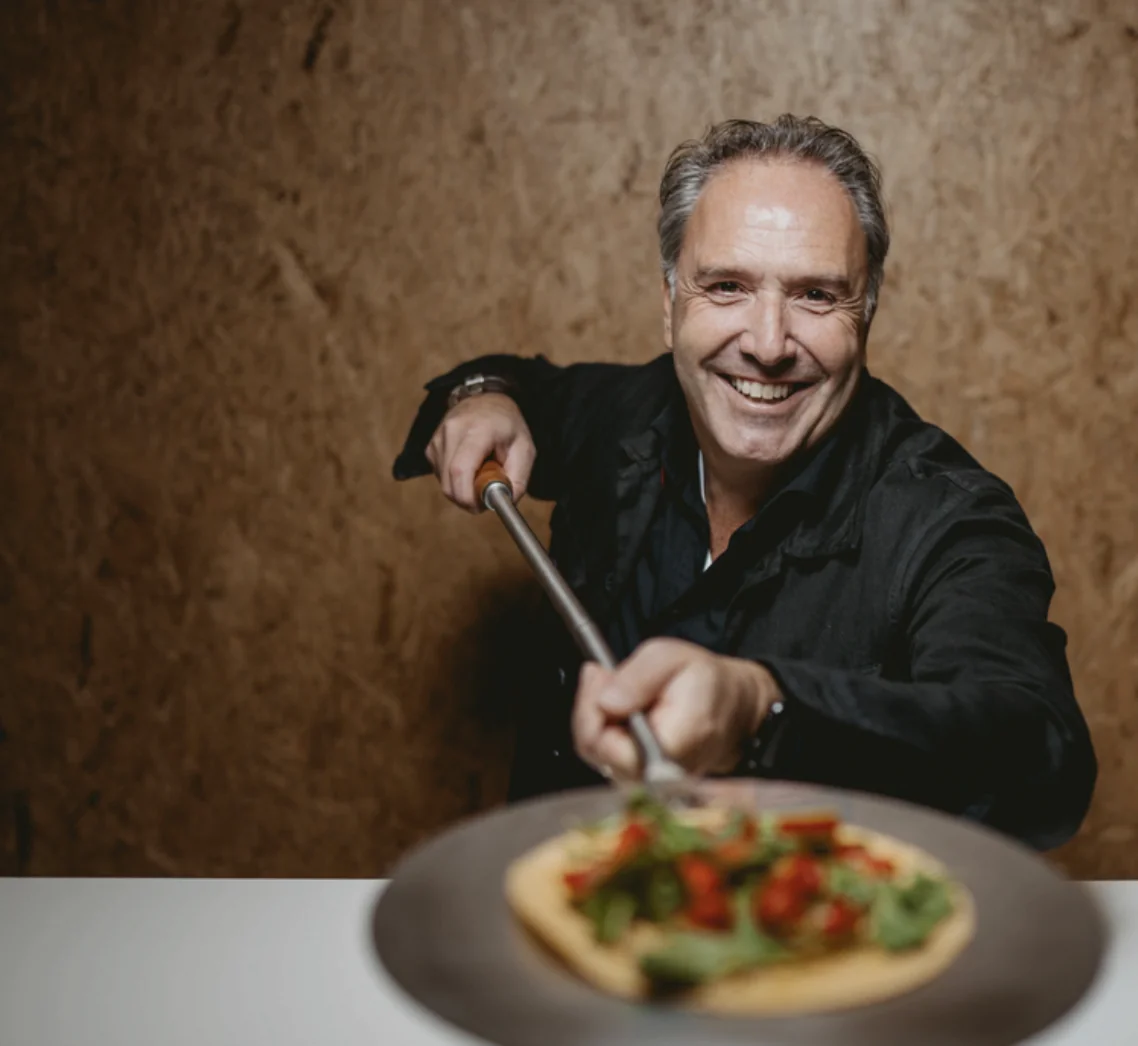
Wouter Staal is the founder and CEO of impact organisation YB (previously Yoghurt Barn) and is an ESG strategist at large and medium-sized food organisations at home and abroad. In addition, Wouter has been involved as an expert in The Sustainable Food Route projects from Conceptional.
Making an impact sometimes comes from intrinsic motivation and sometimes from extrinsic motivation. For me, this started years ago at Yoghurt Barn with a gut feeling. Initially, that feeling said we needed to do something regarding animal welfare. When more and more climate data came up around 2020 and I started looking into it, that feeling became a reality. We already had no meat, but other animal products turned out to contribute so much to emissions that we started the transition to plant-based.
Even more than in my own company, I notice at other companies that the transition to sustainability is a marathon and not a sprint. I also noticed this with the SFR projects. Together, we then go looking for the reason why companies want to become more sustainable, and then come up with a clear strategy.
For me, sustainability is indeed reducing the bad things you do (footprint), and increasing the good things you do (handprint). For example, reducing the share of meat (footprint) or offering a circular product on your menu made from your own food waste (handprint). The very fact that this balance between the two is always different makes it interesting for me. Effectively striking the balance between the two is happening more and more.
For a few months now, it has been taken seriously by the bigger players. Think of the big retail parties and wholesalers. This is due to international progress and legislation. This has made it a daily topic and allows the whole food chain to move. As a company, it is therefore important to consider what role you want to take within sustainability.
Fortunately, there are more and more companies that want to stay ahead. In finding that role, you see that if the big organisations start working together they can and will make a huge impact. This automatically gives you more data and makes you an expert on the subject.
I still notice a lot of discomfort in the market: 'we have to do something, but we don't know how and what.' Companies often do not know how (well) they are already doing in the field of sustainability. In addition, there is so much information coming at you that it quickly becomes overwhelming. It is important to simply start. You never learn to do everything right the first time. 'I fear that by 2030, there will be a mismatch between supply and demand in F&B.'
Taking responsibility across the food chain (scope 3 emissions). Sustainability goes beyond emissions, but if you focus on reducing your emissions, F&B often has 90% in scope 3. Of this, three-fourths often come from animal products. If you know that, then you can start switching gears. If you want, you can go fast with CO2e reduction in the first years by making that shift to more vegetable products.
This can be summed up in three things:
From Conceptional, we strongly believe that there are two ways to put together a plan. Based on consumer needs or based on principles.
I see a positive trend. Big players are committing to international guidelines. I also think it is the responsibility of the big companies to take steps toward sustainability. Policies are encouraging less animal-based and better animal-based. As a result, I assume that in 2030 our plate will look completely different, with more plant-based offerings, but also more organic products. Consumers will therefore have to accept that F&B offerings will change.
From studies on consumer behaviour, we know that consumers prefer to stick to their routine and do not want to switch to plant-based. The demand side of the consumer is simply lagging. I'm concerned that by 2030, there will be an imbalance between the consumer supply and demand in F&B. The government needs to step in and demonstrate that it's okay for the world to change. This will make it easier for food service companies to adapt their supply chain and stay afloat.
Turn your gut feeling into expertise. In many organisations, there are great opportunities for young, driven people who show initiative and delve into sustainability. Many companies are in various stages of sustainability. Resource management suddenly gets a lot of opportunities. There is also an emergence of 'Young boards' where the younger generation is involved in decisions for the future. You cannot become a generalist on this subject. It is important to specialise in one aspect of sustainability so that you can go in-depth into it. 'Turn your gut feeling into expertise.'
It was great to have a project with diverse areas of expertise into the team, allowing us to make a greater impact. I fully support the approach of the Sustainable Food Route, to look at sustainability as a whole. The approach of multiple focus areas and the approach from concept developers is unique in the market at the moment and leads to a holistic and pragmatic strategy.
As Conceptional, we are creative minds in Sustainable F&B Strategy and Solutions. We support our clients from F&B Strategy, Concept Development to Implementation and Performance Improvement. We develop complete F&B Masterplans for leisure parks, malls, and airports and transform spaces into places. We have been doing this for over 13 years for our national and international clients, implementing over 300 projects. With the Sustainable Food route, we help food service brands and organisations become more sustainable and start this important journey in a holistic, realistic and especially pragmatic way. A tailor-made Sustainable Food Route, with pragmatic and concrete short-term and long-term objectives, translated into the impact on proposition, systems, processes and organisation.
Author: Hidde Verschuren & Claartje Verschoor