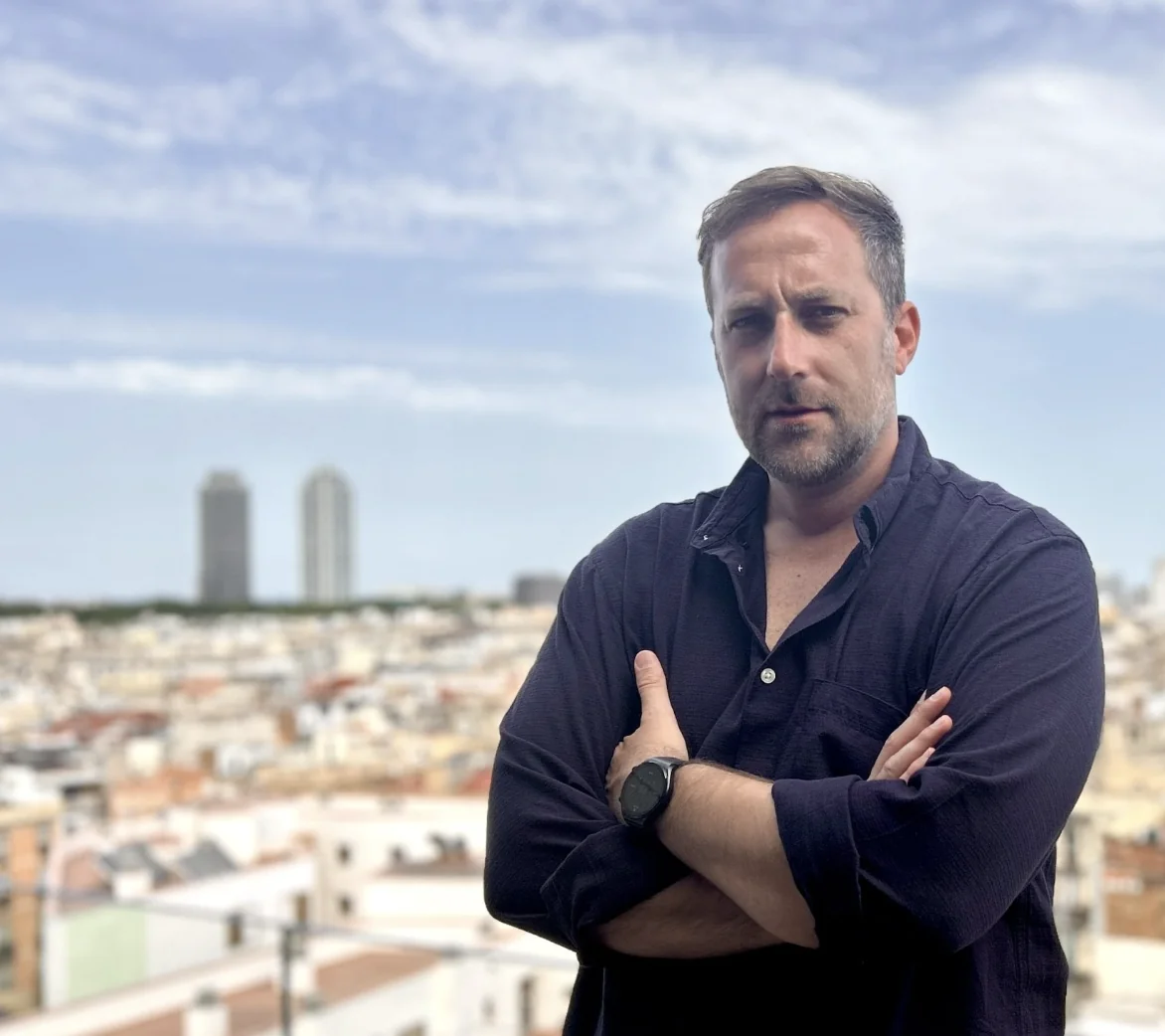
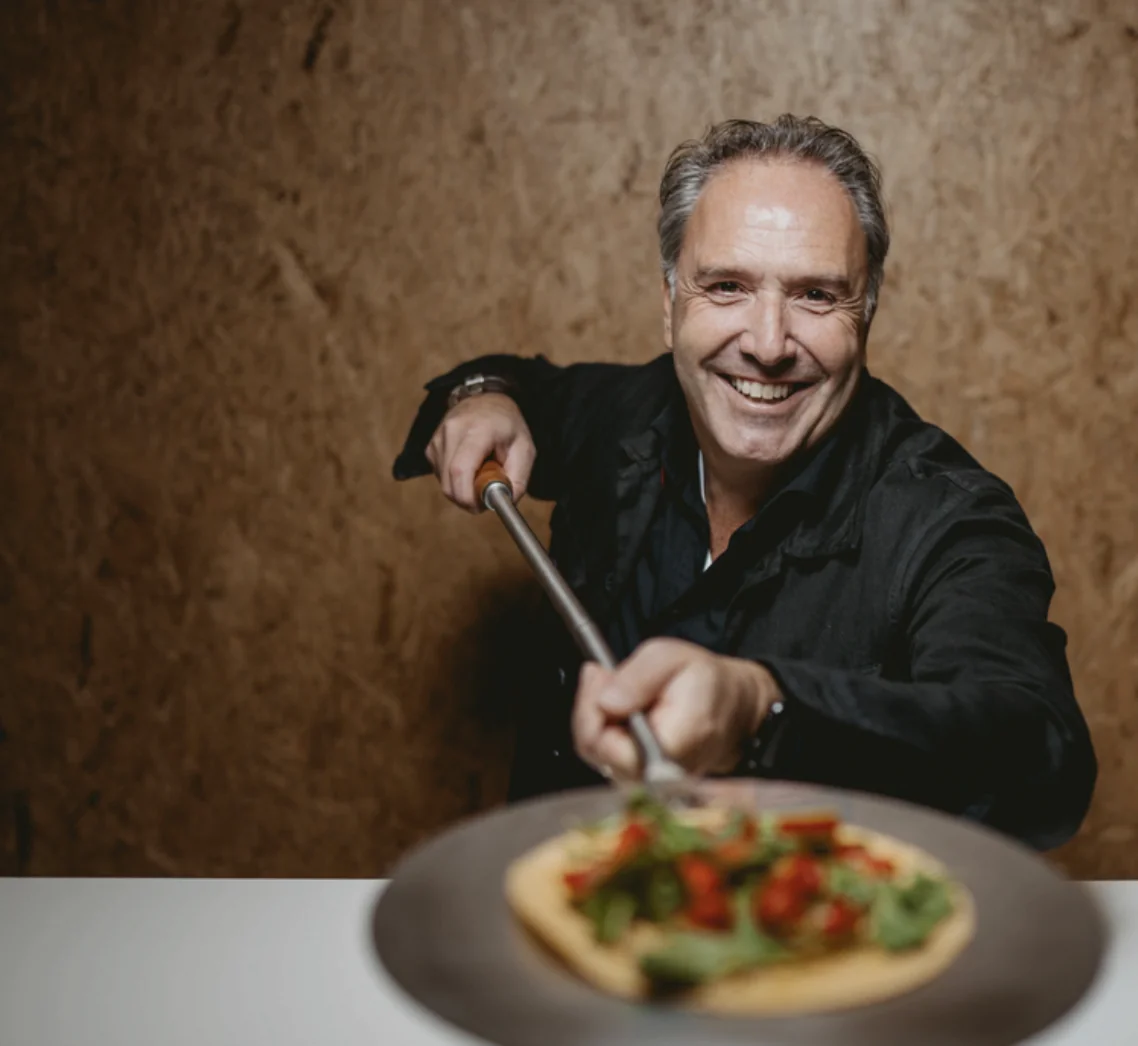
In the series Heroes of the Undercurrent, we speak to people who are working tirelessly for the sustainability transition inside and outside organisations. People who do not wait for 'the top' to move, but are the movement themselves. In this edition, we meet Manon van Leeuwen: serial sustainability entrepreneur, speaker, former founder of the company Zustaina, and author of the book Green Hearts Great Business, which was #1 in the Management Book Top 100 for a long time.
A conversation about waking up, green flags, behavioural change, system shifts, and the power of stardust.
With many sustainability warriors, you see a clear 'turnaround': a moment of awareness that changes their course. For Manon, that turn was not out of nowhere. 'I was a WWF ranger as a child,' she says. 'I gave talks on acid rain, stopped eating meat from the age of 12, and took posters of the circus off lampposts. That compassion was in it from an early age.'
Yet she lost something along the way. 'After college, I went full steam ahead with my career. A big house, travelling, children. The idealism faded into the background.' Until – purely because of Leonardo DiCaprio – she accidentally got struck by the documentary Before the Flood. 'I saw footage from the fashion industry and felt pure shame. Why wasn't I doing anything? Why was I living like a consumer with no conscience?'
That night, she made a rigorous decision: not to buy new clothes for a year. 'Only second-hand, and only paid for with the proceeds from my own closet. It was withdrawal. But it brought me peace and awareness.'
A week before her planned 50-day volunteer trip in Nicaragua, Manon's sister died suddenly. 'We were incredibly close. That blow opened up everything. I delved even deeper into climate change. In psychology, this is called "self-discrepancy": being confronted with who you thought you were versus who you really are.'
The loss led to the creation of her company Zustaina—named after her sister. 'I sold sustainable gift boxes. Shampoo bars, cashew nuts, vegan wine. Not as an online shop, but as a tangible experience: smelling, tasting, feeling. People had to see and feel it before they really started to change.'
In corona time, Zustaina grew explosively. 'Companies were looking for meaningful gifts for their employees. Everyone was sitting at home, there was a renewed focus on health, nature and connection. We even got the FD Gazelle Award.'
But after 2023, the tide turned. 'Companies dropped out. It suddenly became "too sustainable". Geopolitics, inflation and CSRD made organisations cautious. They preferred chips and cheese from the Jumbo Supermarket to a more sustainable message. I was literally told, "we don't dare to give this green gift box anymore now".'
In the end, she had to stop Zustaina. 'Not because of the products – they were better than ever. But because of the fear and lack of guts in organisations.'
Where does the real barrier to sustainability lie? Not in knowledge, says Manon, but in behaviour.
'In our modern society, we seem to be constantly stuck in a state of fight, flight or freeze. We stand in traffic jams, work through action lists, take children to school, fulfil social obligations and are stimulated throughout the day by phones that demand our attention and give us a constant flow of dopamine and impulses. As a result, our lives have become far removed from the simplicity of Adam and Eve who only occasionally picked an apple or hid from a wolf. Instead, we constantly live in a state of readiness, with no space to make the connection between head and heart. We function largely on autopilot – our primal brain rules. As much as 95% of our behaviour we simply repeat from the day before. Think about it or deal with it tomorrow: but what do you think about when you wake up? Chances are it's a problem from yesterday. And so we live on and on in repetition, with no awareness, no real breakthrough. This is exactly what I want to make clear with my book.'
So, according to Manon, this is precisely the big problem. 'If you wake up every morning with the problem of yesterday, there is no room for the problem of tomorrow. While that is exactly what sustainability requires: daring to think ahead.'
So what does this mean for organisations? If individuals already constantly struggle with automatic patterns and live by yesterday's reflex, the same applies – or perhaps even more so – to organisations. Organisations too are living systems, made up of people, and thus subject to the same routines. Whether you are CEO, manager or employee in a department: you often come in with the mental baggage from the day before. As a result, many organisations are busy cleaning up 'yesterday's shit', instead of consciously creating space for innovation. Whereas you should expect organisations to have people who dare to look ahead, give direction, and focus on future opportunities instead of merely reacting to the past. Especially in larger organisations, you see that the majority is focused on putting out fires, while only a few are concerned with tomorrow's direction. But that balance is essential.
Yet in practice, you see that this looking ahead often falters. Euphoria arises, sustainability ambitions are formulated, Chief Sustainability Officers (CSOs) are appointed – and then the momentum seems to be there for a while. But then people get burned out, leave the organisation, or fall back into old habits. The reason? Because there is no structural structure built in to sustain the new behaviour. Even people who are deeply moved – by an urgent insight, a personal moment or an inspiring story on stage – fall back into yesterday's pattern without lasting support. The spark is there, but the bedding is missing. And that is precisely what calls for a fundamentally different way of looking at organisational change.
We are in the midst of large-scale systemic change – a shift that is badly needed in almost every domain: education, healthcare, behaviour, economy. And while the pace sometimes seems frustratingly slow when you look at it by day or by year, the direction is hopeful. You have to dare to think of this transformation in decades. It is precisely then that you see the upward trajectory. Think of the concept of the social tipping point, which Jan Rotmans, among others, talks about: once about 25% of people start moving, the system tilts. And that momentum is getting closer.
The undercurrent – the group of people intrinsically motivated to bring about change – may not make much noise, but it does set the course. Increasingly, you see this undercurrent breaking right through the upper current. That gives hope. Because it is precisely in this quiet movement that the power of sustainable transformation lies. But that demands something of us. From people like you and me, who persevere despite resistance and relapse. It is not a light task, but it is a necessary one. Hopeful, because we know that change is possible – if we stay the course together.
When asked what organisations need to become truly sustainable, Manon is clear: courage and mildness.
'It takes courage to opt for sustainability when the economy is struggling. But also gentleness, because change takes time. You can't force people. You can tempt them.'
To achieve real change, we need to re-learn to think for ourselves – back to basics, beyond the constant pursuit of speed, efficiency and convenience. We need to stop 'arguing with time', although that is difficult in a world where making money and paying bills are daily realities. Yet as individuals, we have more influence than we often think. By making conscious choices – saving with a green bank, voting with the future in mind, using less plastic or simply filling up less often with companies that do not fit your values – you can influence the system from within. And yes, for those who want to go further: make your voice heard, join in, take action. The undercurrent becomes increasingly powerful as people begin to recognise and use their power.
Organisations in particular are now at a tipping point. In recent years, many companies have declared that sustainability is important, they have hired a Chief Sustainability Officer and written reports. But true transformation requires more than words and positions—it requires perseverance and behavioural change. And that is exactly where many are falling back into old reflexes. But especially in sectors like food & beverage, choices can quickly make a difference. Less meat, more vegetable. Not as a sacrifice, but as a substitution that yields profits – for health, for the planet and for the labour market. Storytelling can be a powerful catalyst in this. Not by pointing or forcing, but by inspiring. It is the language of stardust: touching, connecting, and moving.
Sustainable change often starts with individual awareness and moral consciousness. In conversations, you increasingly hear that it is not just about convincing, but mainly about mobilising forward energy. As soon as someone in an organisation – for example, a CSO – not only thinks but also acts, movement is created. People who are already further along in their own consciousness recognise this and latch on. But that doesn't get us there yet. The big mistake is thinking that the story has been told by now. As if we have passed the stage of explaining, inspiring and motivating. In reality, we are actually in a crucial phase where repeating, deepening and continuing to enchant that story is essential. Without that continuous repetition, you will run into walls of resistance or fatigue. And if you are not actively working to break down those walls, they will simply remain in place in the future.
In her G-Heart model, Manon calls this the 'T of Thrive' – the moment when people fall into a motivation trap. It is the natural course of behavioural change: you start enthusiastically, with a clear reward in sight, but along the way that energy often sinks in. Everyone knows it from quitting smoking, exercising, or drinking less. The same patterns apply within organisations. That is why it is crucial that leaders – and certainly CSOs – not only inspire, but also guide, encourage and repeat. Start again and again with the G of Grow: explain why we are doing this, what it will achieve, and how we will achieve it together. Create desire, enthusiasm, and concrete steps. At the same time, there is a risk in the role of sustainability experts: wanting to score too quickly, chasing goals, or getting ahead of the troops on their own. Or worse – treating sustainability as a stand-alone project, rather than a fundamental movement that should touch all processes and people.
Those who follow the news can easily be discouraged by the slowness of the transition. But those who look back five years see something else: progress. The electrification of mobility is no longer a promise, but a reality. Plant-based alternatives have become mainstream. More and more companies appoint Chief Sustainability Officers, publish impact reports, and put sustainability structurally on the agenda. Legislation is being tightened, chains reformed. 'Think about the protein transition, solar panels, electric cars, car trains – these were hardly imaginable in this scale five years ago,' says Manon. 'So much is happening.'
Yet we often remain focused on what is not yet succeeding. But she says the real challenge lies in reinforcing what is already moving. The green flags are there: bans on polluting vehicles, behavioural change in mobility, the return of rail transport, and countries like China that – despite criticism – emit less per capita than we do. 'Perhaps we should see some of those countries as inspiration,' argues Manon. 'The question is not whether we change, but whether we are willing to raise those flags together.'
We often make the mistake of thinking that everyone is already 'awake'. That sustainability is now taken for granted, that the urgency is widely accepted. But according to Manon, this is a dangerous illusion. 'Change takes time. It is not a button you flip, but a process of awareness, confrontation and persistence.' That collective awakening often does not come naturally, but is accelerated by external shocks. Corona was one such moment. So was the war in Europe. 'It may sound uncomfortable,' she says, 'but sometimes proximity to discomfort is necessary to really get moving.'
Yet she does not advocate fatalism, but hopeful realism. 'We need to learn to turn frustration into direction. Precisely by focusing on small, conscious choices and the power of the undercurrent that is becoming increasingly visible.' Or, as Manon puts it, 'Let us hope that in five years' time, we will not have woken up startled, but grown awake.'
This interview is part of the Heroes of the Undercurrent series by Conceptional. Previous episodes: Debbie Rooms (Compass Group Netherlands) and Inge van Baardwijk (Royal Schiphol Group). Manon van Leeuwen is a sustainability entrepreneur, speaker and author of Green Hearts Great Business.