The food and beverage industry is undergoing a significant transformation, largely driven by advancements in Artificial Intelligence in F&B. Luca Scholpp from Conceptional shares insights into this revolution, from personalized menu recommendations and optimized inventory management to creative collaboration. This interview will explore the benefits and offer advice for companies considering implementing AI.
AI is shaping our present. Furthermore, it will shape our future in ways we can only begin to imagine. AI feeds on data; the more data is fed into these systems, the more accurate the outcomes. The role of AI in the Food and Beverage industry will grow exponentially. We're already seeing successful adoption in areas like delivery, route planning and generative chatbots. This is just the beginning.
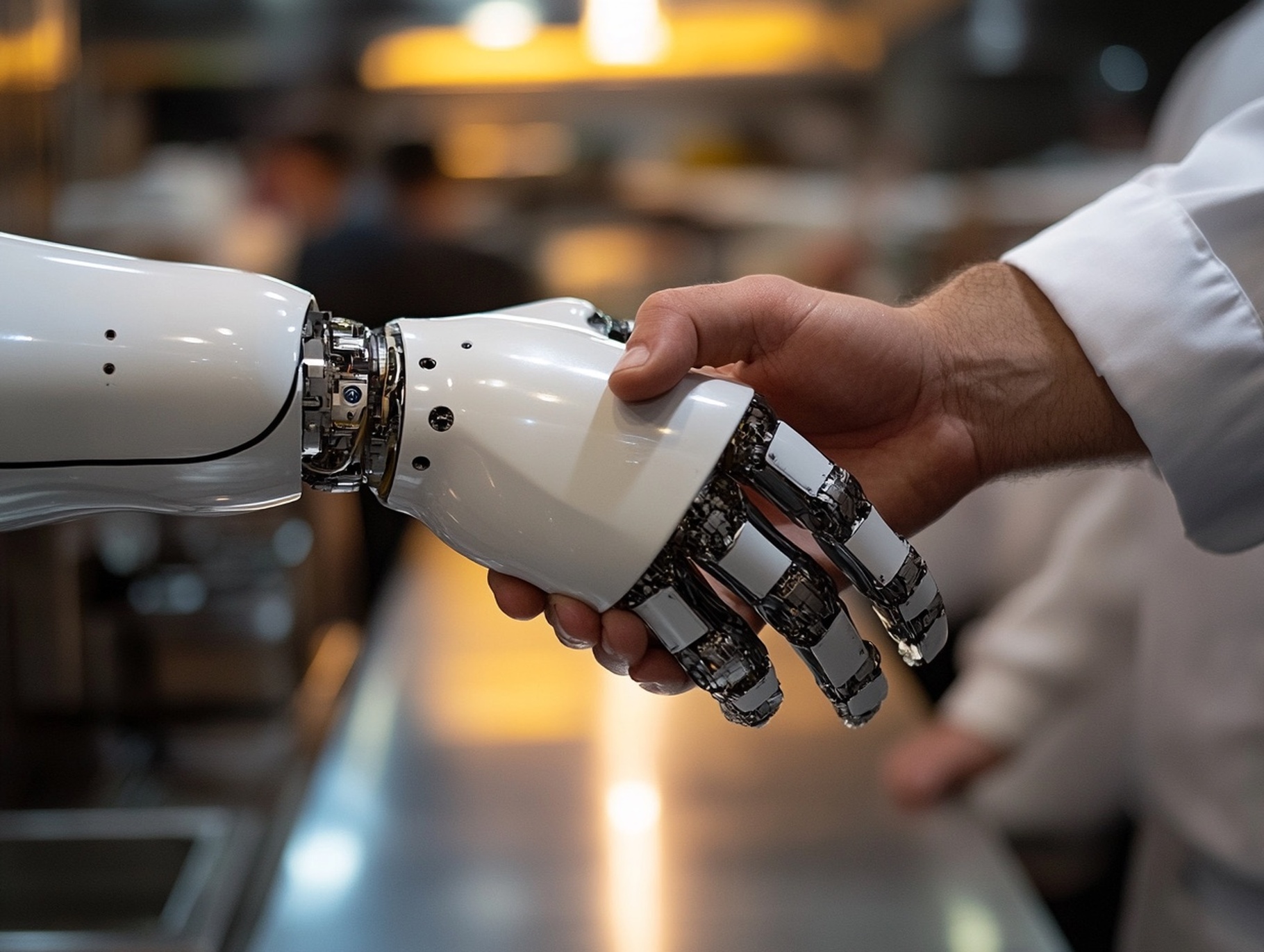
Ultimately, this technology will expand across all sectors. Personalized menu recommendations, optimized inventory management, predictive demand forecasting, and even robotic kitchen staff are possibilities. The potential applications of Artificial Intelligence in F&B are limitless. AI empowers us to accelerate services. For instance, services such as research and concept ideation, creating an interactive playfield. This can sometimes lower costs for our clients.
We are currently training our team to collaborate with AI. Creativity is very important to our work. Therefore, we are cautious in how we adapt this technology. Approaching this collaboration so it does not influence the organic creative process. While the creative process may look different, AI in Food and Beverage unlocks different creative outlets. It's crucial to remember that AI is a tool, not an objective.
The discovery of unique applications excites me most. There are endless ways the technology can be used. Moreover, companies are finding creative ways of implementing it. I'm also fascinated by the speed of innovation in AI. Companies aren't waiting for annual software updates. Instead, they're continuously experimenting and releasing beta versions.
We at Conceptional believe that intense studies on how to use AI in Foodservice are key. These will enable maximum results in concept development and F&B placemaking. That's why Conceptional invests, tests, and executes for more than a year on this topic.
The idea that people using AI are lazy is an oversimplification. It's true that AI can be used lazily. However, if you want to stand out, you need knowledge and experience. The real differentiator will be the skill in prompting, refining, and integrating AI outputs. It's not about avoiding work. In contrast, it is about working smarter with AI in Food and Beverage.
I recommend not waiting around. This technology already has numerous use cases. Therefore, it's time to experiment and envision its potential impact. Now is the perfect moment to prototype and learn. This will help you understand how to adopt AI in Food and Beverage for your company. No matter how big your company, it's important to keep an eye on this technology.
Again, the speed of innovation. For example, when I started using an image generator, the tooling was limited. But then, every month, new features were added. The pace of AI in Food and Beverage progress is unlike anything else. Every day, progress is made. In addition, these systems are reaching new heights.
For the customer, this technology can elevate the dining experience. However, the extent depends on the restaurant's concept and desired customer experience. Privacy plays a significant role, specifically what data customers are willing to share.
On one end, a fully robotic kitchen creating custom meals based on personalized menu recommendations. On the other, AI reducing waste through optimized inventory management and repurposing ingredients. The possibilities with AI in Food and Beverage are vast. Consequently, its accessibility will only grow.
AI in Food and Beverage is poised to revolutionize the industry. From personalized menu recommendations to optimized inventory management, the applications are vast. The rapid speed of innovation means businesses must adapt quickly. Furthermore, they should embrace AI to remain competitive. The future of dining is intelligent, efficient, and personalized.